Tag Archive | "state Sovereignty"

Tags: , ,

Freedom’s Destruction through Constitutional Deconstruction

Posted on 24 October 2009 by Tenth Amendment

by Timothy Baldwin

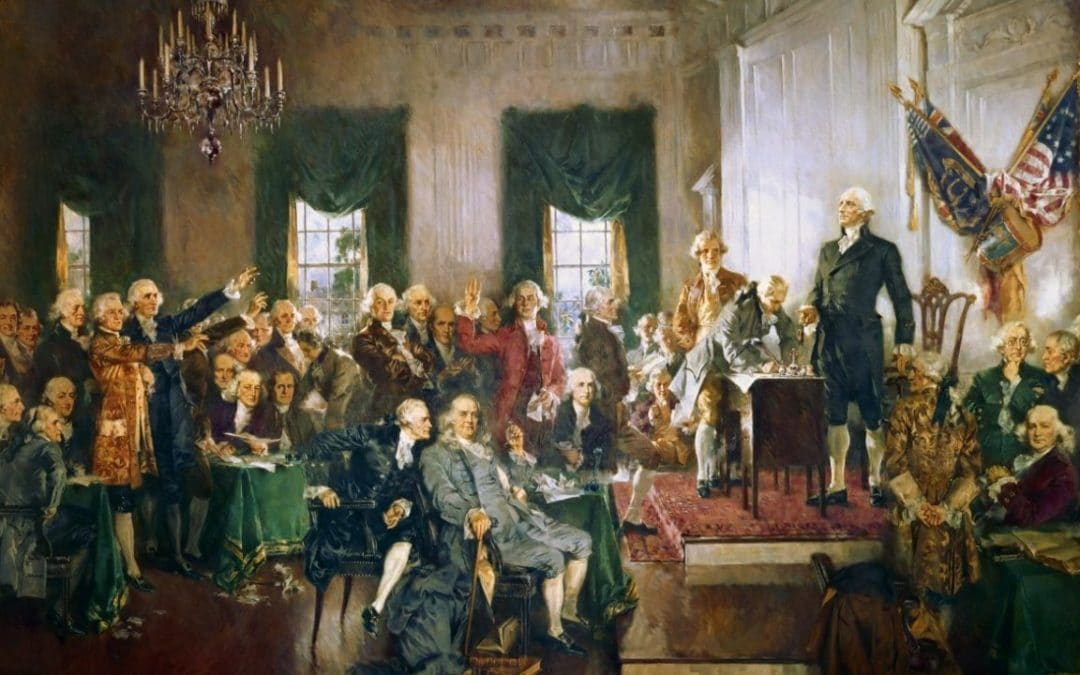
During the Constitutional Convention, from May to September 1787, delegates from the colonies were to gather together for the express purpose of amending the Articles of Confederation to form a “more perfect union” (NOT a completely different union!). The men that met in Philadelphia, Pennsylvania, were under direct and limited orders from their states to attend the Federal Convention explicitly to preserve the federation and State rights and to correct the errors of the existing federal government for the limited purposes of handling foreign affairs, commerce among the states and common defense.

Yet, during that private and secret convention, there were men who proposed that a national system be established in place of their current federal system, destroying State sovereignty in direct contradiction to their orders. (Jonathan Elliot, The Debates in the Several State Conventions on the Adoption of the Federal Constitution as Recommended by the General Convention at Philadelphia in 1787, vol. 1, 2nd ed., [Philadelphia, PA, JB Lippincott, 1891], 121) Of course, the public was not aware of this fact until years after the ratification of the Constitution, when the notes taken in the convention were printed and released to the public. Continue Reading

Comments (15)

Tags: , , ,

They Can’t Push Us Around Forever

Posted on 20 October 2009 by Tenth Amendment

by State Rep. Susan Lynn (TN-57th)

The following is a letter from Tennessee to the other 49 State Legislatures

We send greetings from the Tennessee General Assembly.  On June 23, 2009, House Joint Resolution 108, the State Sovereignty Resolution, was signed by Governor Phil Bredesen.  The Resolution created a committee which has as its charge to:

  • Communicate the resolution to the legislatures of the several states,
  • Assure them that this State continues in the same esteem of their friendship,
  • Call for a joint working group between the states to enumerate the abuses of authority by the federal government, and
  • Seek repeal of the assumption of powers and the imposed mandates.

It is for those purposes that this letter addresses your honorable body. Continue Reading

Comments (137)

Tags: , ,

Obamacare: Another Assault on Federalism

Posted on 19 October 2009 by Tenth Amendment

by Bob Ellis, DakotaVoice.com

Federalism and Tenth Amendment state’s rights have been under assault since the days of FDR.

The federal government was created to serve the states and, in the words of James Madison, “to be exercised principally on external objects, as war, peace, negotiation, and foreign commerce.”   Under the Tenth Amendment,

The powers not delegated to the United States by the Constitution, nor prohibited by it to the States, are reserved to the States respectively, or to the people.

The astute constitutional student will recognize that there is no authority whatsoever under Article 1 Section 8 of the U.S. Constitution (the part of the Constitution which outlines the powers of the federal government) to create or administer a health care system. Continue Reading

Comments (16)

Tags: , ,

Getting the 10th Amendment Right

Posted on 10 October 2009 by Tenth Amendment


Continue Reading

Comments (0)

Tags: , ,

Jefferson’s Union

Posted on 07 October 2009 by Tenth Amendment

by Luigi Marco Bassani, Mises.org

jeffersonbust

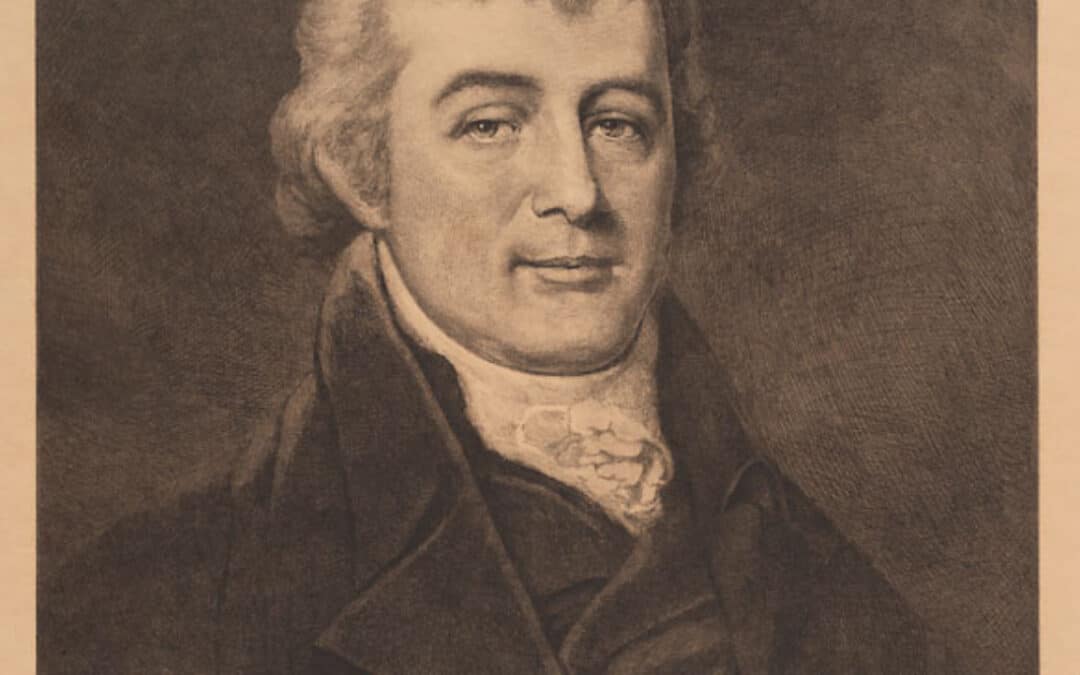
It is astonishing that Jeffersonian scholars have paid so little attention to the states’-rights aspect of Jefferson’s thought. If one reads the Kentucky Resolutions of 1798, Jefferson appears to be the father of the Confederate States of America much more that of the United States. Here, Jefferson sought to provide a constitutional interpretation that would at least in principle prevent the union from “consolidating.” He wanted to keep a system of loose federalism very similar to the one embodied in the Articles of Confederation.

Jefferson took advantage of the first opportunity in which the federalists openly disregarded the Constitution to address problems concerning the relationship between the federal government and the states, and his interpretation placed further limitations to federal power on the grounds that the U.S. were established as a republic based on states’ as well as individual rights.

The occasion was the approval of two acts that posed a serious threat to the system of American liberties. The Alien and Sedition Laws were approved in 1798 (under this law, you could be sent to prison for criticizing the president). The Virginia and Kentucky Resolutions, drawn respectively by Madison and Jefferson, were the opposition answer to those laws.

For the first time in American history, Jefferson outlined the political and juridical doctrine of the “State rights school” that became the standard way of viewing relations between States and Nation in the Southern states during the 19th century, up to the end of the War for Southern Independence.

Revived and perfected by John C. Calhoun, this doctrine became the heart of the controversy between the two sections of the country. Jefferson asserted that the States had created a federal government as a simple agent, subordinate to them, for limited and well-defined functions, and that the federal government did not have any right to expand its own authority.

Each individual State, as far as the controversies regarding the Constitution were concerned, had the right to determine when the compact had been breached, and what measures were most appropriate to restore the violated order and redress the wrong. Thus, it was a right (explicitly called by Jefferson “natural,” therefore sacred) of each State to pronounce the illegitimacy of an act of Congress contrary to the constitutional compact.

Jefferson’s account of the nature of the Union–a voluntary contract among free and independent States in order to establish a common caretaker for few and enumerated things–contains a great deal of common sense. In a nutshell, the idea behind the Resolutions is as follows: the States are the ultimate judges of the constitutionality of federal legislation. This requires a rigorously voluntary framework.

But the Supreme Court, a branch of the federal government, at the time was already becoming what it is now, that is to say the arbiter of conflicts between the States and the federal government. In this case, the constitutional framework is threatened, since the federal government, not the Constitution, becomes the judge of its own expansion. More generally, if the States are expected to obey any federal law, regardless of whether the act had been issued according to the Constitution, only lip service is paid to the system of guarantees known as “federalism.”

Despite the ratification of the federal Constitution, Jefferson believed that vis-à-vis each other, the States remained like individuals in the “state of nature.” To characterize the true nature of the American union, for Jefferson, it was sufficient to transpose the Lockean natural rights model from individuals to the States. He never appealed to the theory of sovereignty (a term that does not even appear in his original draft of the Resolutions) to claim that the States are “free and independent”: their liberty and independence lie in the nature of the bond in which they find themselves, and not in the somewhat metaphysical property of being “original political communities.”

Despite the Constitution, the States retain all of their natural rights with respect to one another–exactly like individuals in a “state of nature.” Jefferson’s appeal to nullification was a peculiar application of the theory of natural rights: a “state’s natural right,” the right of nullification, was entirely within the realm of the federal compact, and was by no means an extra-constitutional remedy. In Jefferson’s opinion, such a right derived entirely from the nature of the American union, as it had been historically constructed.

Jefferson understood better than anybody else in his generation that Congress was the real heir to the king and that the concentration of powers in the federal center would have brought about “a government of discretion.” To this ultimate evil he preferred secession, as he wrote again and again. So, yes, Jefferson’s goal was the preservation of men’s natural rights, but he believed that the best way to reach that was through a strict territorial division of power.

Of course there were many inconsistencies in Jefferson’s writings, and his behavior in politics often contradicted his stated political philosophy. That said, it remains indisputably true that Jefferson was a Lockean who believed in the natural right of property and in the rights of the states as independent political entities to determine their own destinies. That so many scholars are unwilling to face these truths reflects, not contrary evidence in Jefferson’s writing, but rather the bias and wishful thinking of the academic class.

Originally published on May 23, 2002 at Mises.org

Marco Bassani, scholar in residence at the Mises Institute and author of the introduction to the Italian edition of Rothbard’s Ethics of Liberty, teaches political thought at the University of Milan.

Comments (7)

Tags: ,

There is no “National” Health Care System

Posted on 06 October 2009 by Tenth Amendment

by Wayne J. Barbarek

Although there may be problems, as in any industry, I cannot keep from wondering to what, or which, “system” everyone is referring.

There is all this talk of the “Nation’s” health care system; however, I fail to find where health care is a “national” object. There is nothing whatsoever in the Constitution suggesting it is among the certain enumerated objects of the “Federal” government, with the whole works of the Convention at Philadelphia making it more than obvious that it cannot be.

So, how can there be a “national” system for something that is unquestionably not among the certain enumerated objects that are delegated to the “Federal” government?

What is plain, though, rather than there being any kind of “national” system, there are certainly individual separate systems belonging exclusively to the several States — individual systems that the States have a constitutionally guaranteed right to establish or not establish, and to regulate or not regulate, as they see fit. Or, as they decide is appropriate for their individual and separate circumstances and interests.

What is also plain is that, no matter the alleged good intentions, good faith or urgency for a needed plan, and no matter the degree of passion or how great the numbers in its favor, until which time the necessary additional powers are constitutionally granted to the Federal Government, this remains their guaranteed right, individually and collectively within their separate societies made plain by the 9th and 10th amendments to the constitution of these united states.

Specifically, the Federal government has utterly no direct authority or jurisdiction whatsoever extending to those objects belonging exclusively to this Union’s member States any more than it has authority extending into any State in Europe; — and, whether or not anyone agrees, is irrelevant, for the plain truth is that Health Care, its industries, institutions, businesses, professions, education, licensing, wages, et cetera; are all among those objects belonging exclusively to the several States.

Not only does the authority of the Federal government not extend to such objects plainly belonging exclusively with the States, the undeniable fact still remains that the fundamental purpose of Union and its Federal government is not to be the source and facilitator of interferences and aggressions against them.

But instead, for the purpose of preserving them as separate independent sovereign societies; and, in so doing, meant to protect and preserve their Rights as the true sovereigns to decide separately and independently for themselves how the considerable remaining powers meant to be left with them shall be, or shall not be, exercised.

In other words, it is the absolute Right of the People of each State, independently of one another, to freely choose how they want to govern their separate society — to wit, how liberal and generous or how conservative and frugal it wants to be — without interferences and impositions from other member States or the Federal government.

And, in exercising those Rights of Freedom and Liberty, no State has a right, above all the Federal government, to “judge” and impose their will upon another just because that smaller society is, in their meager opinion, making inappropriate laws, not making desired laws or because it has customs, morals, habits or interests that are contrary to what they “think” or “believe” is appropriate and conducive to being an American State, even though its laws, customs, morals, habits and interests are not contrary to the Constitution.

So, what does this mean and how does it all add up as it pertains to the President and the controlling faction with which he is aligned?

As a Union meant to be of Laws derived from “true” construction and not of Men derived from forced construction, and as servants that are obligated by their required oaths to support the constitution of these united states, they have utterly no authority whatsoever to “judge” that which plainly belongs exclusively with the individual States; — nor do they have any authority whatsoever discussing, above all, proposing or promising to establish a National system, reform the several State systems made under their individual authorities or make health care a fundamental right using ordinary acts of legislation.

And, by arrogantly pursuing their current course, they make plain their intent to pervert the Constitution (according to the framers, an act tantamount to treason against these united states) and commit lawless aggressions against the States in utter defiance of their oaths and the Constitution.

In doing so, they are lawlessly encroaching upon and committing direct interferences into jurisdictions, authorities and objects belonging exclusively with the States by exploiting a temporary exigency to better excite the emotions and passions of the People so as to facilitate and hatch there repugnant schemes, perfectly timed so that on the spot, none can be, nor are they permitted to be, immediately refuted.

“But it will not follow from this doctrine that acts of the large society which are not pursuant to its constitutional powers, but which are invasions of the residuary authorities of the smaller societies [States], will become the supreme law of the land. These will be merely acts of usurpation, and will deserve to be treated as such.” (Hamilton, fp. 33)

Wayne Barbarek is the author of Documents Illustrative™ V1.0c — a searchable database product containing the Journals of the Convention at Philadelphia and the Federalist Papers, which his company publishes and can be downloaded at http://www.documentsillustrative.com — helping to make it easier for today’s citizens to do that for which the original legislators preserved the Journals: “contradict false statements propagated about the Constitution”.

Comments (27)

Tags: ,

State Sovereignty: A Revolutionary Movement

Posted on 30 September 2009 by Tenth Amendment

by Frank Chodorov

The following article is from the June 1950 issue of analysis, vol. VI, no. 8, and was reprinted on LewRockwell.com

The Constitution that came out of the Philadelphia convention in 1787 was not acclaimed a “divine document.” On the contrary, the folks were rather skeptical about it and made ratification difficult. Yet there was no organized opposition. The Constitution simply ran head on into the individualism that had defied the arrogance of British Toryism. The backcountry, which started at the outskirts of the few seaboard cities, was as suspicious of a national government as if been hostile to foreign intervention. It was this spirit of self-reliance, of wanting to be let alone, that the ratifiers had to face and to which they addressed their argument in The Federalist.

Since the doctrine of States’ Rights is rooted in this early opposition to the Constitution, any effort to revive it should take into account the psychological barrier that confronted Madison and Hamilton. States’ Rights and individualism are historically related. It would seem to be good strategy, therefore, for a modern decentralization movement to plot its course by the same star. True, it is impossible to reconstruct the environment in which the individualism of early America was tempered; there is no haven of free land around. But the urge to be oneself, to work out one’s destiny without let or hindrance, is not a matter of environment; it is inherent in the human make-up. Even the socialist, for all his talk of immolation for the good of a mass, betrays by his very rebellion the altogether human urge for self-expression through free choice. We all have it in varying degrees; none is ever rid of it. The necessity of existence may impel us to make adjustment to conditions, but the ego thus put under restraint is not destroyed. The indestructibility of the ego is certified by the revolutionary movements that characterize the history of man. A States’ Rights movement is in essence a revolution, an opposition to the urgency of political power to limit choice and compel adjustment to its will and must rest its case on this fact. It is a certainty that any attempt to cut down the power of the central government is a fatuous gesture unless there is some feeling for freedom in the country. Continue Reading

Comments (24)

Tags: , ,

Liberty vs Power: The Battle Rages On

Posted on 22 September 2009 by Tenth Amendment

by Timothy Baldwin

The battles in America have almost gone unchanged since 1936 — and even, before. They are battles for the mind, the soul and the heart. They are battles of philosophy and understanding.

On May 26, 1936, constitutional professor of Princeton University, Edward Samuel Corwin, penned these words in his book, “The Commerce Power Verses States Rights: Back to the Constitution“:

“‘Back to the Constitution’ is the motto of this small volume, and by ‘Constitution’ is meant the Constitution of George Washington, Alexander Hamilton, James Madison (the Madison of 1787, not of 1798, nor of 1829), and of John Marshall; not the ‘interested sophistications’ of those later foster fathers of the Constitution, certain distinguished counsel who about 1890 began, with the too frequent aid of a sympathetic Court, to enmesh the powers of the National Government in ‘a network of juridical nicities’.” (Edward Samuel Corwin, “The Commerce Power Verses States Rights,” Preface, (Princeton University Press, 1936). Continue Reading

Comments (9)

Tags: , ,

Nullification: The states have a “nuclear option,” too

Posted on 13 September 2009 by Tenth Amendment

by Josh Eboch

After gambling his young presidency on an ambitious domestic agenda, Barack Obama’s political insecurity and ideological arrogance now demand passage of a health care “reform” bill that will vastly increase the federal government’s role in the lives of American citizens. This could be accomplished in a number of ways, from a Trojan Horse compromise to the so-called “nuclear option” of budgetary reconciliation. But make no mistake, it will be accomplished; despite the vocal protestations of voters across the country. Continue Reading

Comments (23)

Tags: ,

They Don’t Have the Authority

Posted on 06 September 2009 by Michael Boldin

Comments (0)


Follow...


Sponsored Links


Sponsored Links


Tenth Amendment Pledge


Sponsored Links


Categories


Archives